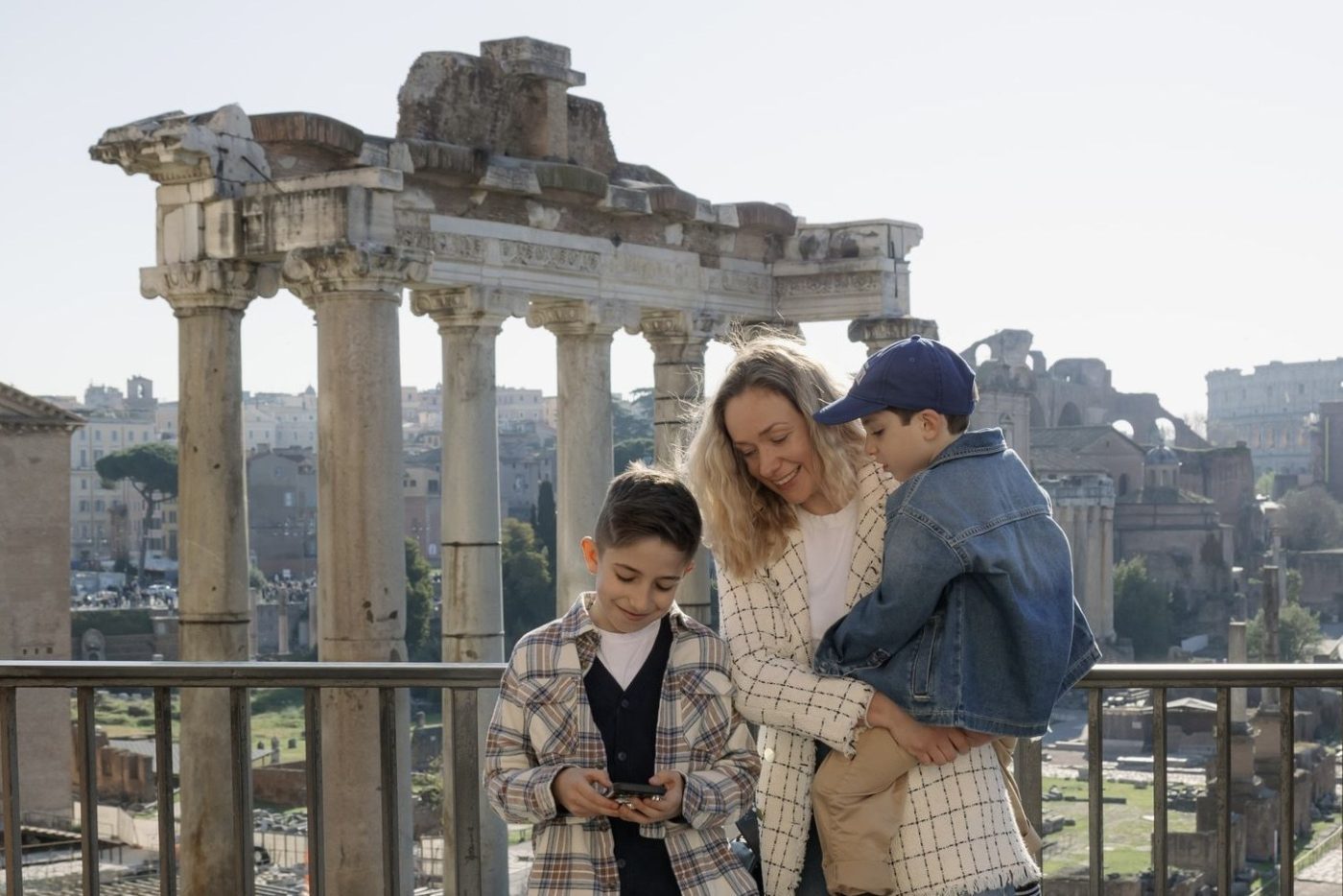
Transport in Rome with children sounds frightening: packed buses, cobbles that stop a pushchair dead, and a metro of just three lines in a city with hundreds of sights.
In practice it is simpler than it looks, and the main conclusion is an unexpected one: in the centre, walking is usually faster. Below is when to ride, when to walk, and how to stop the journey itself being wasted time.
Walk or ride?
Most of the central sights are within a twenty-minute walk of each other. Rome’s metro was dug through an ancient city, so there are few lines and they skirt the historic centre: there is simply no way to ride straight to Piazza Navona.
| Situation | How to travel | Why |
|---|---|---|
| Under 20 minutes across the centre | Walk | Transport takes just as long once you add waiting and changing |
| The other side of the city | Metro | Fast and predictable, traffic is irrelevant |
| Where the metro does not reach | Bus or tram | Dense network, but journey times depend on traffic |
| With a pushchair | Walk or bus | Not every metro station has a lift |
| Midday in summer | Metro | The only way to cross the city without overheating |
| Ostia Antica, Park of the Aqueducts | Metro plus train | Walking is not an option; about half an hour to ride |
The metro: three lines and twenty centuries underfoot
There are only three lines — A, B and C — which is awkward for the city but handy for children: a map with three colours is learned in one journey, after which they tell you where to change.
The metro opened in 1955 and every new stretch ran into archaeology. Hence the best part: some stations are built into the ancient layers. At San Giovanni the city’s history is laid out beside the escalator, layer by layer from the present down to antiquity — arguably the best free museum in Rome.
Journeys are short, so nobody gets bored. A task that always works: count how many stations on the line begin with an S. There are suspiciously many.
Buses and trams
The bus network is dense — over three hundred routes — and it covers everywhere the metro does not. One drawback: journey times depend on traffic, so a bus is not something to rely on when you have a museum slot.
With children, though, the bus has an advantage the metro lacks: you can see the city. The front seats are practically a ride, and tram 19 runs past parks and quiet districts, so it works as a sightseeing tour for the price of a ticket.
The small electric buses that squeeze through the lanes of the centre are usually taken for toys. While you are at it, look for the she-wolf with Romulus and Remus on stops and bodywork — it is the city’s emblem and it turns up everywhere.
The Fiat 500 and other ways to ride
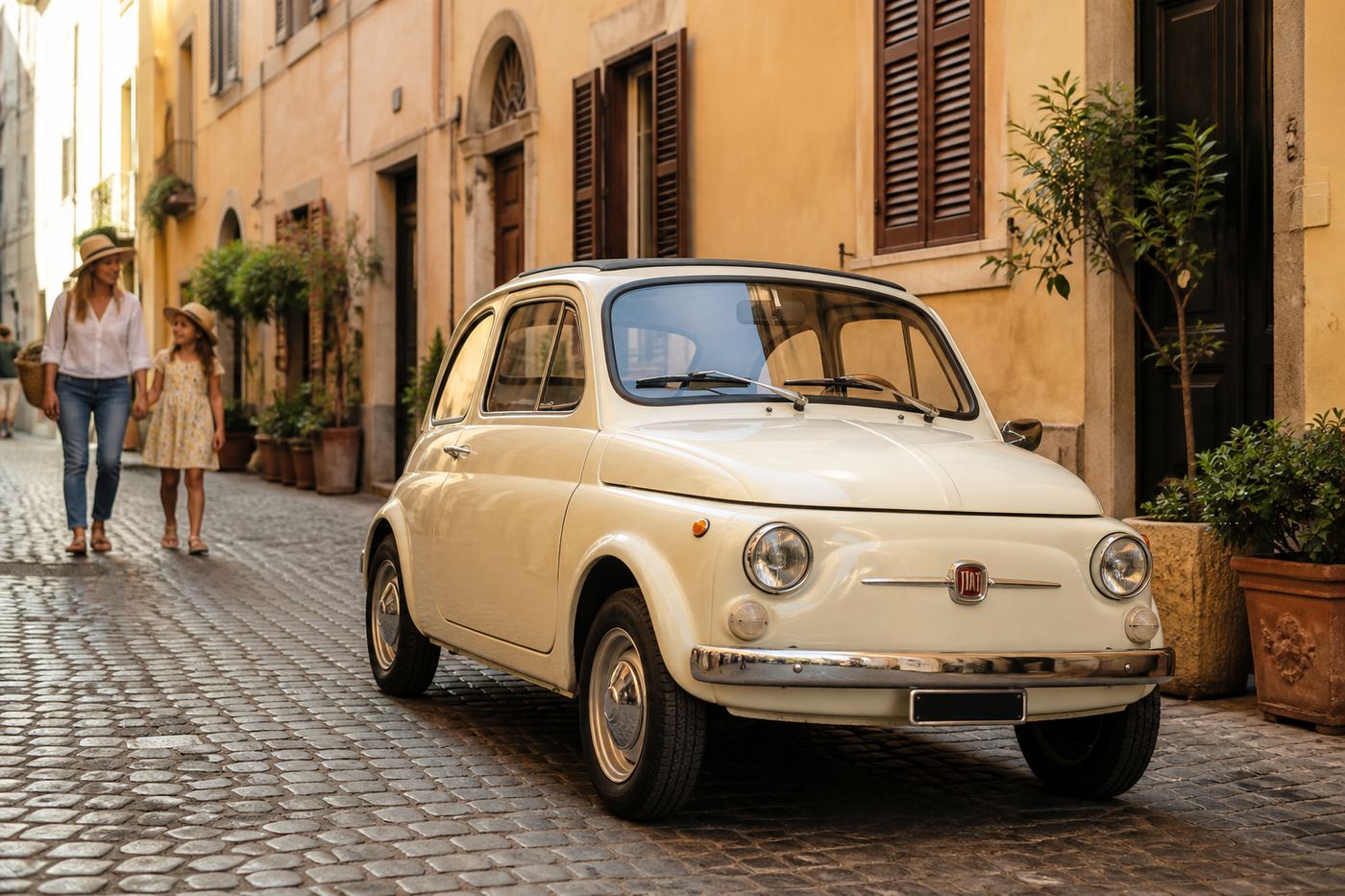
The round Fiat 500 appeared in 1957 and became the symbol of the Italian economic miracle: a tiny car the whole country drove. Today it is mostly an attraction — hire one for a couple of hours, or take a tour with a driver.
As transport it makes no sense: there is no parking in the centre, and four people in it is tight even without luggage. As an experience it works: children see a cartoon car, and the photograph ends up on the cover of the album.
A task for the whole day if a Fiat is out of budget: count how many red 500s you spot before evening. It usually runs into dozens.
On foot — and why it is usually the best option
Rome was built for walking long before cars, and the centre still remembers it. Everything is close, and between the sights you pass squares, fountains and gelaterias — ready-made pauses that the metro does not provide.
What matters with children: the nasoni fountains give free drinking water, squares work as rest stops, and the cobbles demand proper shoes — for adults too.
A good walking task: visit five different fountains in one outing. It turns the stretches between sights from “keep going” into an aim of their own, and that is the central trick of the whole trip.
Tickets, rush hours, pushchairs
- Tickets. More than three journeys in a day and a 24-hour pass for metro, bus and tram beats singles. Current fares are on the operator’s site, atac.roma.it.
- Children. Free and reduced travel rules depend on age and change from time to time. Check before you travel so you are not caught without a valid ticket.
- Rush hours. From 8:00 to 9:30 and from 17:00 to 18:30 the carriages are packed. Between those windows the metro is half empty.
- Pushchair. Not every station has a lift or a working escalator, so check your route in advance. A compact folding model goes up the stairs without being taken apart.
- Validation. Tickets must be tapped or stamped on entry, buses included. Inspectors do appear, and fines are issued without discussion.
Where LooksArt helps
The stretches between stops are the emptiest time of the trip, and that is exactly when children start asking how much further.
LooksArt turns those stretches into part of the quest: the tasks and hints attach to what is around you right now, so walking becomes more interesting than standing still. The app works offline, so you do not need a signal underground. The first quest is free, the full one starts at €29 for the whole family.
The short version
- The centre on foot. Everything else by metro.
- Bus where the metro does not reach — not when you are running late.
- A 24-hour pass if you make more than three journeys.
- Avoid 8:00–9:30 and 17:00–18:30.
- Pushchair: compact and folding, and check the route first.
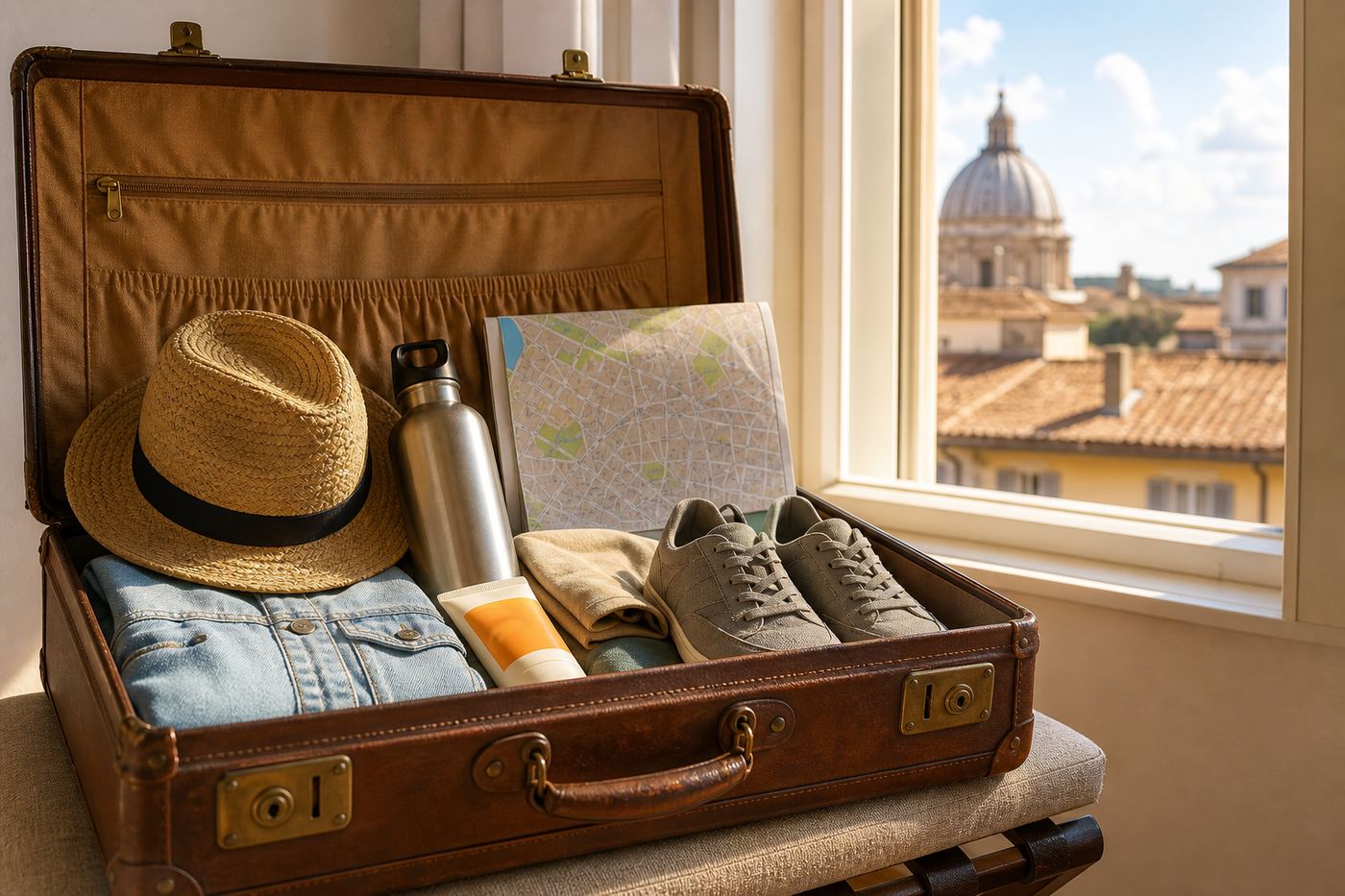
- A refillable bottle: fountains all over the city.
Frequently asked questions
Single tickets or a travel pass?
If you make more than three journeys in a day, a 24-hour pass covering metro, bus and tram works out cheaper and, more importantly, removes the ticket question while you are holding a child. Check current fares at atac.roma.it.
Is the metro workable with a pushchair?
Not every station has a lift or a working escalator, so check your route in advance. A compact folding model helps: you can carry it up the stairs without taking it apart.
Which hours are best avoided?
From 8:00 to 9:30 and from 17:00 to 18:30 are rush hours: carriages are packed and unpleasant with children. Between those windows the metro is half empty and the rides are short.
Do children travel free?
Free and reduced travel rules for children depend on age and change from time to time. Check the operator’s website before your trip so you are not caught without a valid ticket.
Is public transport needed at all if the centre is compact?
Most central sights are within a twenty-minute walk of each other, so walking is often faster. Transport earns its place on the long hops — Ostia Antica, the Park of the Aqueducts, Villa Doria Pamphili.
Ready to turn a tour into an adventure?
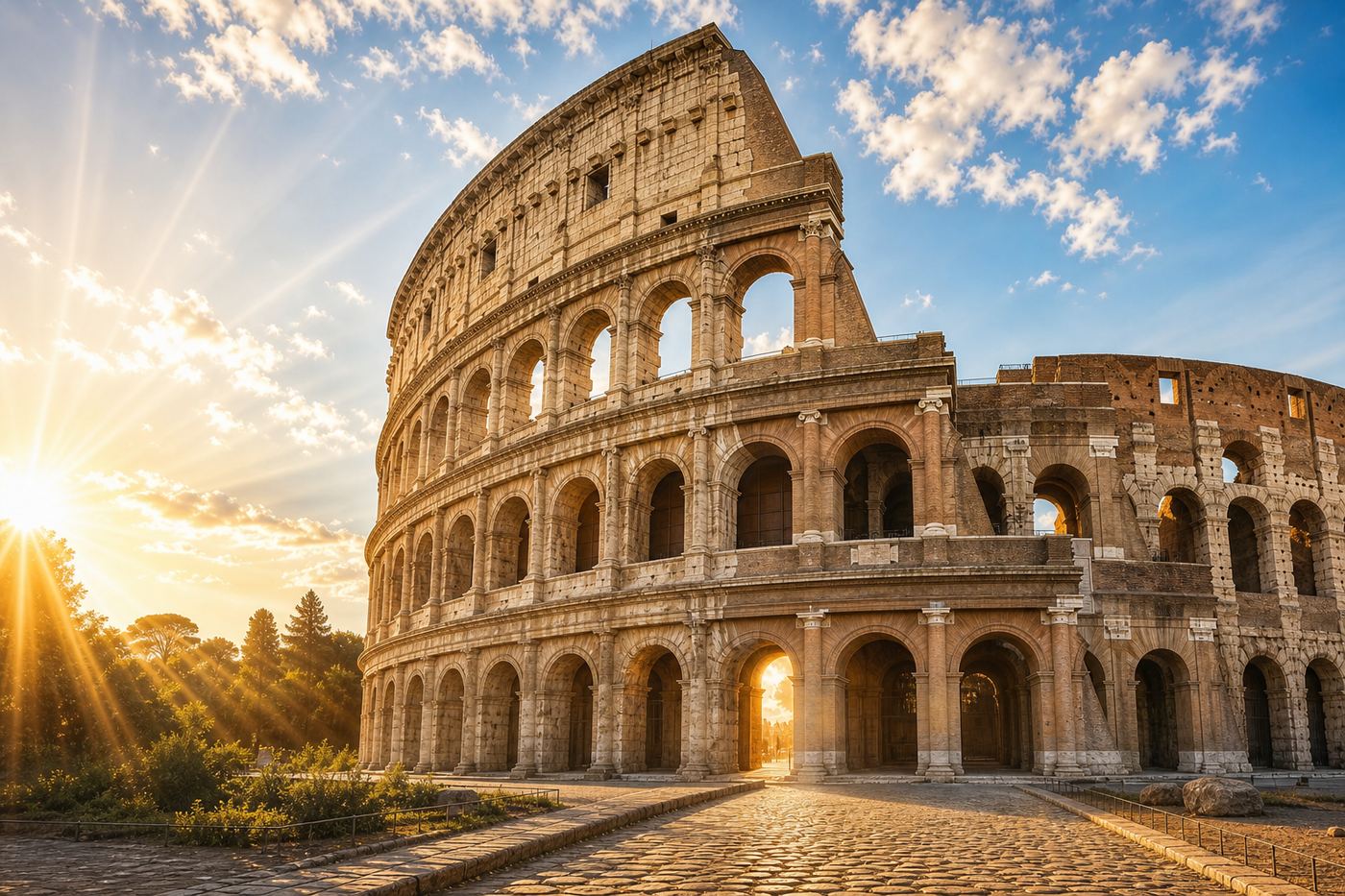
Start with the free mission by the Colosseum. If you enjoy it, unlock the full tour, from €29 for the whole family.